+86 177 2796 1215
Guides / LiFePO4 vs Lithium-Ion
Guide · Comparison

LiFePO4 vs Lithium-Ion

Both are lithium-ion. The difference is the cathode - iron phosphate versus nickel-cobalt chemistries - and that difference decides lifespan, safety and the jobs each chemistry should be doing.

The comparison starts with a naming problem: LiFePO4 is a lithium-ion battery, so 'LiFePO4 vs lithium-ion' really means iron-phosphate chemistry against the nickel-manganese-cobalt (NMC) and nickel-cobalt-aluminium (NCA) chemistries that dominate phones, laptops and most EVs. Those chemistries exist because they pack the most energy into the least weight and volume. LiFePO4 exists because, for a large class of jobs, that is the wrong thing to optimise.

Cycle life is the widest gap. NMC-class cells are typically rated in the hundreds to roughly a thousand full cycles before they fade to 80% of original capacity. LiFePO4 packs in stationary and motive service are rated in the thousands - the storage datasheets in this manufacturer's range state 6,000 cycles or more at 80% depth of discharge. For a battery that cycles daily, that is the difference between replacing the bank in year three and planning around it in year twelve.

Safety is the second gap. Cobalt- and nickel-rich cathodes can release oxygen as they break down under abuse, feeding thermal runaway; the iron-phosphate cathode's strong phosphorus-oxygen bond holds its oxygen far more stubbornly, so LiFePO4 tolerates overcharge, heat and mechanical abuse with a much wider margin. Energy density is where the nickel chemistries win honestly: per kilogram and per litre they store more, which is why aircraft, phones and long-range EVs accept their trade-offs. Cost follows the materials: iron and phosphate are cheap and abundant; nickel and cobalt are neither.
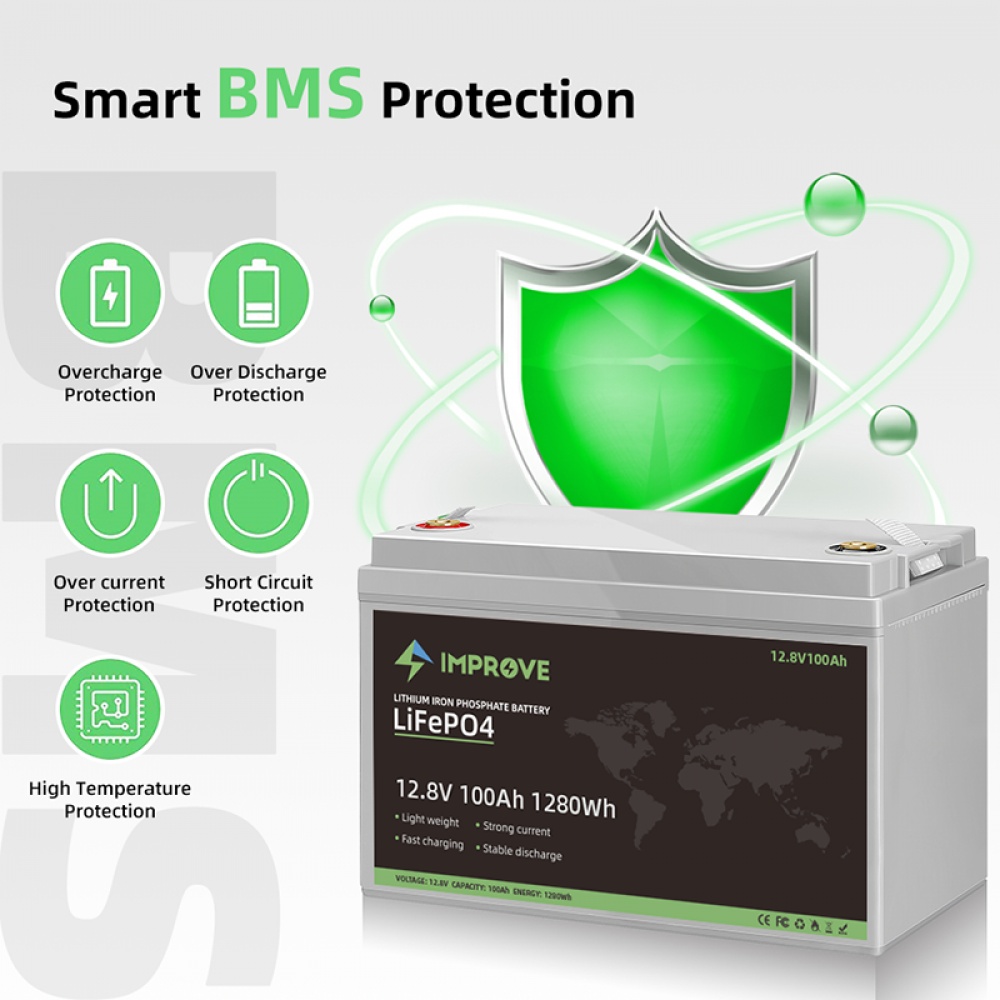
12.8V LiFePO4 battery pack
12.8V LiFePO4 battery pack from the manufacturer's published range.
12.8VRV & packs
25.6V24V systems
38.4V36V motive
51.2VStorage & 48V
Specification Plate

Key specifications

Cycle lifeLiFePO4: thousands of cycles (6,000+ at 80% DOD on this range's storage datasheets). NMC class: typically hundreds to ~1,000 (general figures)
Nominal cell voltageLiFePO4 3.2V · NMC class ~3.6-3.7V
Thermal stabilityLiFePO4 markedly more resistant to thermal runaway (cathode material property)
Energy densityNMC class higher per kg and per litre - its genuine advantage
MaterialsLiFePO4: iron + phosphate (abundant). NMC: nickel, manganese, cobalt (costly, concentrated supply)
Best-fit dutiesLiFePO4: storage, motive, RV, backup. NMC class: weight-critical portable and EV traction

Figures are the manufacturer's published data for this range. The written quote states the exact configuration of your build.

Why It Earns Its Place

Features

Cost per cycle, not per battery

A battery that costs 30% less and lasts one fifth as many cycles is the expensive battery. Deep-cycle buyers should divide price by rated cycles at a stated depth of discharge.

Safety is a system property too

Chemistry sets the baseline; the BMS, enclosure and installation quality decide the rest. Both chemistries demand a proper BMS - LiFePO4 simply starts from a safer material.

Weight only matters sometimes

In a phone, energy density is everything. Bolted to a garage wall or under a golf cart seat, a few extra kilograms buy thousands of extra cycles - a trade most stationary buyers should take.

Voltage behaviour

LiFePO4's discharge curve is very flat: equipment sees near-constant voltage, then a quick fall at the end - which is why state-of-charge must be metered by counting, not by voltage guessing.

Which chemistry for which job?

Choose by duty cycle. If the battery will cycle daily or weekly for years - home storage, a delivery cart, a forklift, a rental fleet - LiFePO4's lifespan dominates the economics. If the battery must be as light as physically possible and cycles are counted in hundreds over the product's life - a drone, a power tool, a long-range EV - the nickel chemistries earn their density. Mixed cases exist (an RV house bank is stationary weight-wise but mobile), and they mostly resolve toward LiFePO4 because the cycle count in touring service is high and the safety margin in a sleeping space matters.

The honest weaknesses of LiFePO4

Three, and a good guide should name them. Energy density is lower, so a LiFePO4 pack is bigger and heavier for the same capacity. Low-temperature charging needs management - charging below freezing can damage cells, so cold-climate packs use heaters or charge inhibition (the self-heating topic is covered in our blog). And the flat voltage curve makes cheap voltage-based fuel gauges useless; a proper shunt or BMS-based meter is part of the system cost. None of these change the verdict for storage and motive duties, but pretending they do not exist is how buyers get surprised.

Ordering & OEM

How ordering works

Minimum order quantities and lead times depend on the product type and the degree of customisation: standard products can start from smaller batches, while custom housings, labelling and packaging are assessed per project. Samples can be arranged, with sample and freight costs confirmed against the requirement. Every enquiry is answered with a written specification and quote stating the model, configuration and terms - nothing about an order here is left to chat messages.

Improve Battery runs OEM/ODM alongside its standard range, and ships with the export documentation each model carries (CE, RoHS, FCC, MSDS, UN38.3 types as listed per datasheet; certificates available upon request). State the model, voltage, quantity and destination in the enquiry form and the sales team in Shenzhen will reply with the full specification.

Questions

Frequently asked

Is LiFePO4 safer than other lithium batteries?

By material, yes - measurably more resistant to thermal runaway. By system, safety still depends on the BMS, build quality and installation, which is why manufacturer build quality matters more than chemistry slogans.

Why do EVs mostly use NMC if LiFePO4 lasts longer?

Range sells cars, and range is energy density. A growing share of standard-range EVs do use LiFePO4 (often called LFP in the car industry) precisely for its life and cost - the same logic as stationary storage.

Which is cheaper?

Per kilowatt-hour of nameplate, prices overlap and move with markets. Per kilowatt-hour delivered over the battery's life, LiFePO4 wins deep-cycle comparisons by a wide margin because of cycle life.

Can the two chemistries share a charger?

No. Charge voltages and profiles differ. Always use a charger specified for the chemistry - the charger pages in this range publish LiFePO4 charge voltages per platform.

Related pages

Tell us the model. We price it in writing.

Model, voltage, quantity and destination - that is all a real quote needs.

Ask About a Pack