+86 177 2796 1215
Applications / Lead-Acid Replacement
Guide · Replacement

Lead-Acid Replacement

Lead-acid is sized by nameplate and used at half. LiFePO4 is used at 80% and outlasts it several times over. This page works through the replacement maths for carts, RVs, forklifts and storage.

Every lead-acid replacement conversation starts with the same arithmetic surprise: a 100Ah lead-acid battery delivers about 50Ah of usable energy if you want it to live, while a 100Ah LiFePO4 battery delivers about 80Ah on the manufacturer's published 80% depth-of-discharge ratings — and keeps doing it for thousands of cycles instead of hundreds. Replacement is therefore not a one-for-one swap of nameplates; it is a re-sizing of the whole bank, usually downward in amp-hours and dramatically downward in weight.

The manufacturer's ranges map onto the classic lead-acid duties one by one: golf cart packs in 36V, 48V-class and 72V replace the six- and eight-battery flooded banks; 12.8V and 25.6V RV batteries replace house banks in motorhomes and caravans; 24V, 36V and 48V forklift batteries replace traction batteries in warehouse trucks; and 51.2V storage systems replace the standby banks that were never really suited to daily cycling in the first place.

Two things must change with the chemistry. The charger profile must match lithium — the manufacturer's charger range exists for exactly this pairing — and any state-of-charge metering that guesses from voltage must be replaced, because LiFePO4's flat discharge curve makes voltage-based gauges read 'full' until shortly before empty.
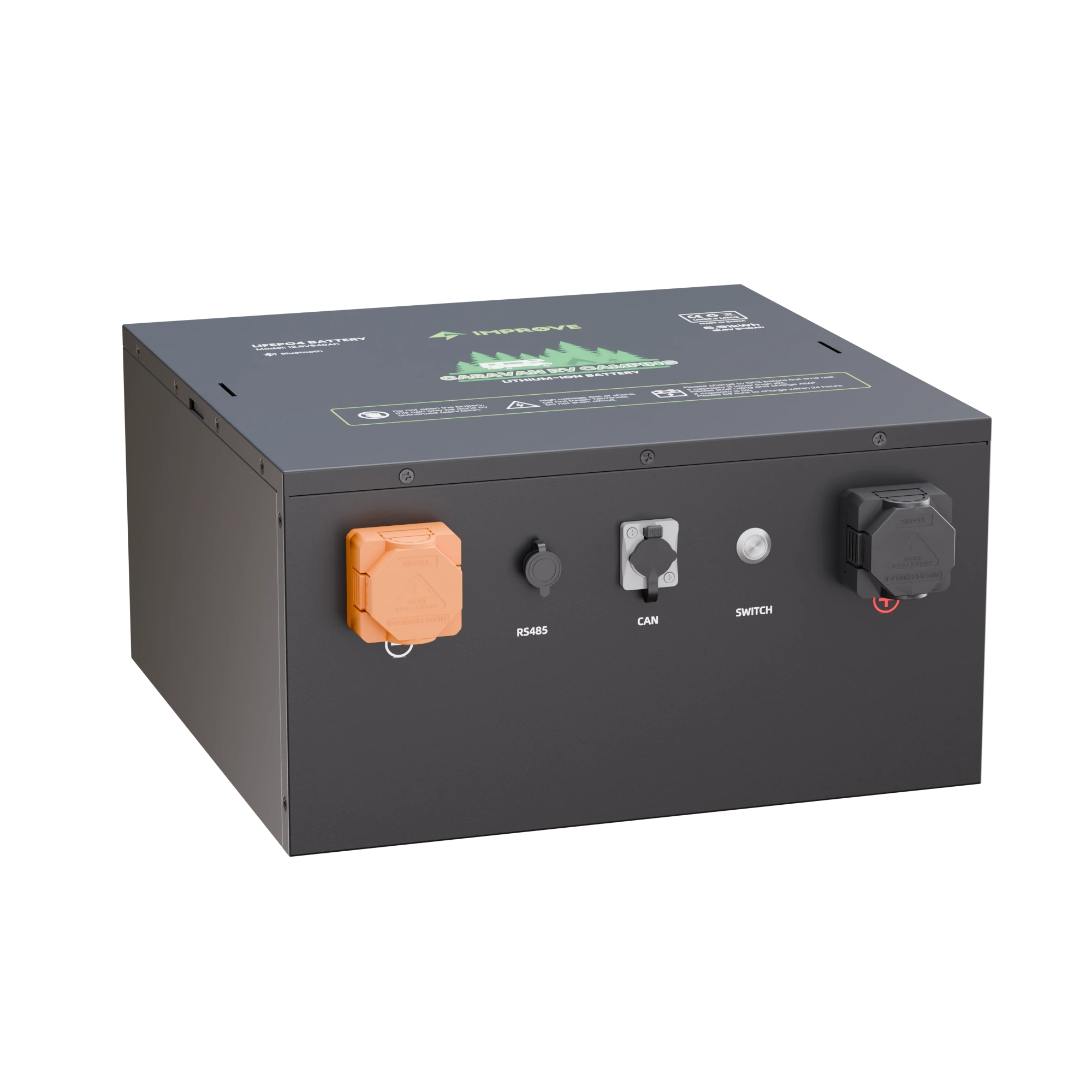
Large-capacity RV LiFePO4 battery
Large-capacity 12.8V LiFePO4 battery from the manufacturer's RV range.
12.8VRV & packs
25.6V24V systems
38.4V36V motive
51.2VStorage & 48V
Specification Plate

Key specifications

Usable capacityLiFePO4 ~80% of nameplate at rated cycle life vs ~50% planning figure for lead-acid
Cycle lifeLiFePO4 6,000+ cycles at 80% DOD on published storage datasheets; lead-acid typically a few hundred cycles at 50% DOD (general industry figures)
WeightLithium replacements typically around one third of the lead-acid bank's weight (general figure)
ChargingFaster charge acceptance; no equalisation; lithium-profile charger required
MaintenanceNo watering, no acid, no terminal corrosion routine
Voltage under loadFlat discharge curve — equipment sees near-full voltage until the pack is nearly empty

Figures are the manufacturer's published data for this range. The written quote states the exact configuration of your build.

Why It Earns Its Place

Features

Right-size, don't copy-size

Replacing 200Ah of lead with 200Ah of lithium overbuys by half. The replacement calculation starts from usable energy, and it usually shrinks the bank.

Cycle economics

Cost per delivered kilowatt-hour over life — not purchase price — is the comparison that decides. It is rarely close.

Charger pairing

Every replacement specification from this range pairs the pack with a lithium-profile charger. The old charger is part of the old system.

Drop-in where it counts

Voltages match the systems being replaced — 12.8V, 25.6V, 38.4V class and 51.2V — so motors, controllers and inverters stay.

Replacement by duty

Golf carts: the flooded bank is heavy, maintenance-hungry and replaced every few seasons; the lithium pack removes the watering round and the mid-life range collapse. RVs: house-bank weight comes straight off the payload margin, and usable capacity per kilogram roughly triples. Forklifts: opportunity charging during breaks replaces the battery-swap room for many duty profiles, and the pack does not gas during charging. Standby and storage: a bank that only floats is the one duty where lead-acid remains defensible - but the moment the system cycles daily, the lithium maths takes over.

When not to replace

If the equipment itself is near end of life, putting a long-life battery into it strands value. And a replacement done without the charger and metering changes is a half-conversion that underperforms the chemistry. Replace the system, at the right point in the equipment life, with the matched set - that is the whole doctrine of this page.

Ordering & OEM

How ordering works

Minimum order quantities and lead times depend on the product type and the degree of customisation: standard products can start from smaller batches, while custom housings, labelling and packaging are assessed per project. Samples can be arranged, with sample and freight costs confirmed against the requirement. Every enquiry is answered with a written specification and quote stating the model, configuration and terms - nothing about an order here is left to chat messages.

Improve Battery runs OEM/ODM alongside its standard range, and ships with the export documentation each model carries (CE, RoHS, FCC, MSDS, UN38.3 types as listed per datasheet; certificates available upon request). State the model, voltage, quantity and destination in the enquiry form and the sales team in Shenzhen will reply with the full specification.

Questions

Frequently asked

Can lithium use the same cables and fuses?

Usually yes for cabling sized to the original bank, but current ratings are verified in the replacement specification — lithium can deliver higher sustained current than the bank it replaces.

Will my inverter or controller complain?

Voltage classes match the originals, so equipment sees the voltage it expects — steadier than before. Communication-equipped packs (RS485/CAN) are specified where the equipment can use them.

How do I dispose of the old bank?

Lead-acid has an established recycling trade with residual value; your local battery dealer is the practical route. We do not buy back old banks, but the recycling credit improves the replacement maths.

What warranty thinking applies?

A battery rated for thousands of cycles is a capital asset, not a consumable. Ask for the cycle rating at a stated depth of discharge in writing — every datasheet in this range states it.

Related pages

Tell us the model. We price it in writing.

Model, voltage, quantity and destination - that is all a real quote needs.

Get a Replacement Quote