Residential storage built around one 51.2V platform: stack it, hang it, stand it up or take it all-in-one. Every format below is a production system from the same factory line, not a rebadged import.
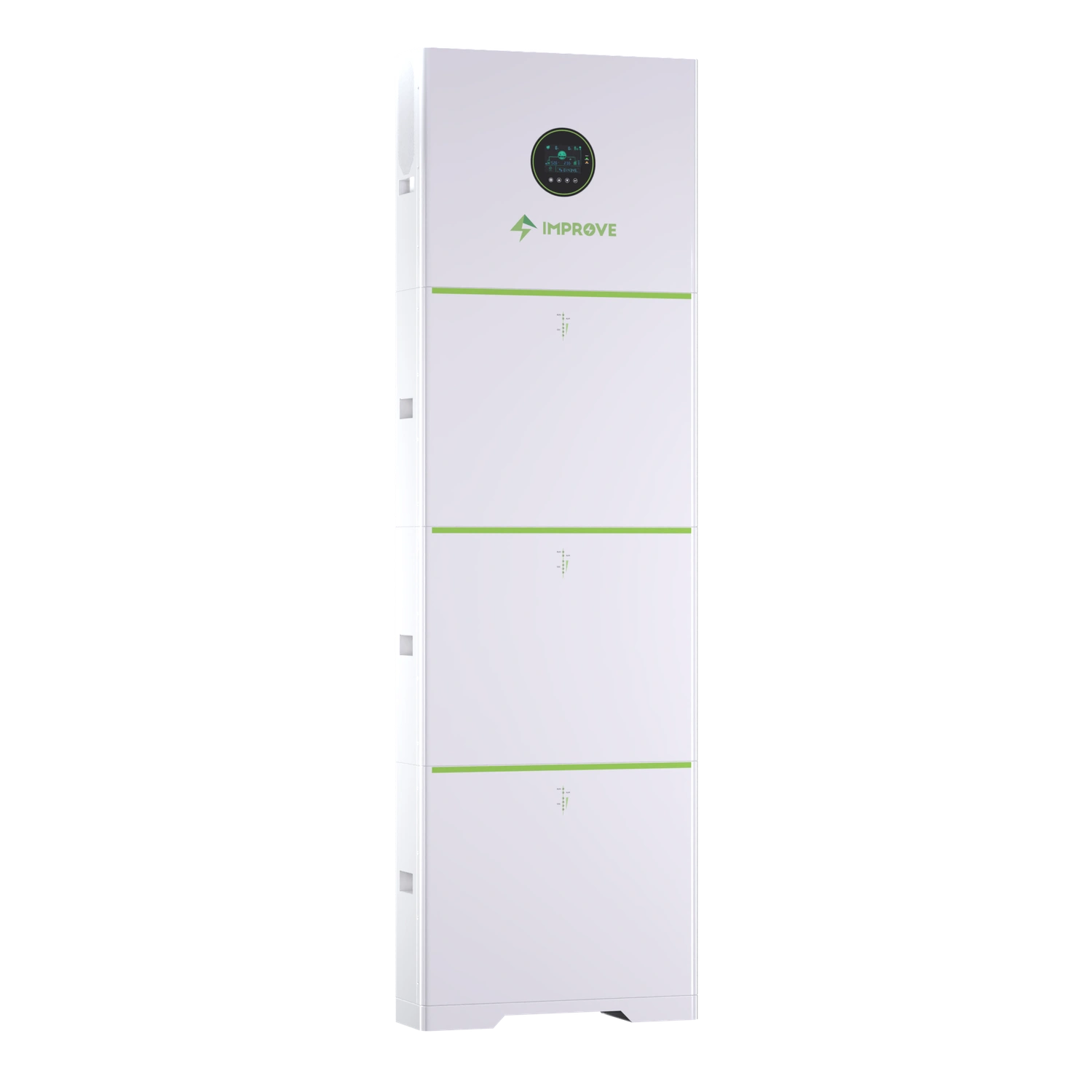
The home storage range is organised by how the battery meets the house. Stackable bricks (5.12kWh and 10.24kWh modules) grow from a single module to multi-brick systems of 30kWh and beyond. Wall-mounted powerwall units put 5.12kWh or 10.24kWh in a 145mm-deep cabinet. Vertical stackable systems add a built-in inverter up to 10kW, and the all-in-one ESS pairs a 10.24kWh battery with a 6kW inverter in one enclosure.
Every residential system on this page uses LiFePO4 cells rated at 6,000 cycles or more at 80% depth of discharge, talks to mainstream inverters over RS232, RS485 or CAN, and is quoted as a complete build — cells, BMS, enclosure, communication cables and documentation in one written specification. Solar battery storage systems are sized from the load profile, not from a catalogue headline: tell us the daily consumption and the backup loads, and the quote states the module count and inverter rating that cover them.
Improve Battery is the manufacturer behind the range: cell sorting, pack assembly, BMS integration and system testing run at the Dongguan manufacturing base, while specification, export documentation and after-sales coordination run from the Shenzhen head office. Distributors and installers buy the same hardware the factory ships to its domestic channel — there is no export-only downgrade line.
| Platform | 51.2V nominal (48V class) across all residential formats |
|---|---|
| Module sizes | 5.12kWh (100Ah) and 10.24kWh (200Ah) building blocks |
| System range | 5.12kWh single module to 30kWh+ stacked and paralleled systems |
| Cycle life | 6,000 cycles or more at 80% DOD, 25°C (per model datasheet) |
| Communication | RS232 / RS485 / CAN; optional Bluetooth, Wi-Fi and heater |
| Parallel capacity | Up to 15–16 modules in parallel on wall and rack formats |
| Certification (published) | CE, RoHS, FCC, MSDS, UN38.3 on listed models; certificates available upon request |
Figures are the manufacturer's published data for this range. The written quote states the exact configuration of your build.
Stackable, wall-mounted, vertical and all-in-one systems share the same 51.2V modules, so a product line can start small and extend without re-qualifying a new battery.
Published inverter output data per model — rated power, PV input window, MPPT range and switch time — so installers can match hybrid inverters before ordering, not after delivery.
Every datasheet states its cycle rating at 80% DOD and 25°C. The 6,000-cycle floor across the residential range is a specification you can put in your own tender documents.
Enclosure colours, labelling, packaging and communication options are configured at order level for distributors building their own storage brand.
Stackable bricks suit garages and plant rooms where capacity will grow: start with one 10.24kWh brick and add modules as the solar array or the load grows. Powerwall units suit finished interiors — the 145mm depth keeps hallways and utility rooms usable, and the 200Ah model doubles capacity in the same wall footprint. Vertical systems and the all-in-one ESS remove the separate inverter purchase: PV input, grid or generator input and battery charging are integrated, with published MPPT windows (for example 125–450Vdc on the 5kW stackable system) that match common string designs.
For whole-home backup sizing, work backwards from the loads that must stay live — refrigeration, lighting, water pumps, network equipment — and the hours they must run. The applications section of this site works through that arithmetic; the factory quote then converts it into modules, inverter rating and a single delivered specification.
Minimum order quantities and lead times depend on the product type and the degree of customisation: standard products can start from smaller batches, while custom housings, labelling and packaging are assessed per project. Samples can be arranged, with sample and freight costs confirmed against the requirement. Every enquiry is answered with a written specification and quote stating the model, configuration and terms - nothing about an order here is left to chat messages.
Improve Battery runs OEM/ODM alongside its standard range, and ships with the export documentation each model carries (CE, RoHS, FCC, MSDS, UN38.3 types as listed per datasheet; certificates available upon request). State the model, voltage, quantity and destination in the enquiry form and the sales team in Shenzhen will reply with the full specification.
Yes. Wall-mounted units support up to 15 modules in parallel and rack units up to 16; stackable systems parallel 1–6 units in single or three phase depending on the model. State the final target capacity in the enquiry so the BMS and cabling are specified for it.
Communication is RS232, RS485 or CAN, the three buses used by mainstream hybrid inverter brands. Send us your inverter model in the enquiry and we confirm the protocol pairing in the written quote.
MOQ depends on the model and the level of customisation — standard models can start from small batches, while custom enclosures and packaging are assessed per project. Samples are available; sample and freight costs are confirmed against the requirement.
Model, voltage, quantity and destination - that is all a real quote needs.