+86 177 2796 1215
Applications / Off-Grid Battery Systems
Application · Off-Grid

Off-Grid Battery Systems

Off-grid is a sizing discipline before it is a product: daily load, sun hours and autonomy days decide the battery. These 51.2V systems are built to be counted that way.

An off-grid battery lives a harder life than a backup battery: it cycles every day, charges from whatever the weather gives it, and has no grid to rescue an undersized system. The off-grid configurations here use the manufacturer's 51.2V stackable and rack-mounted LiFePO4 systems, chosen because their datasheets publish the numbers off-grid design actually needs — PV input window, MPPT range, charge currents and cycle life at a stated depth of discharge.

The published stackable system configuration accepts up to 5,500W of PV with a 125–450Vdc MPPT window, charges at up to 100A in hybrid mode, and parallels one to six units — so a cabin system and a small farm system are the same hardware at different module counts. Rack-mounted formats suit plant rooms and containerised power for remote sites.

Off-grid sizing is unforgiving arithmetic: daily consumption in watt-hours, divided by usable depth of discharge, multiplied by autonomy days. We quote from your numbers and state the assumptions in the quote, so a system that looks cheap because it silently assumes one sunny day never reaches your site.
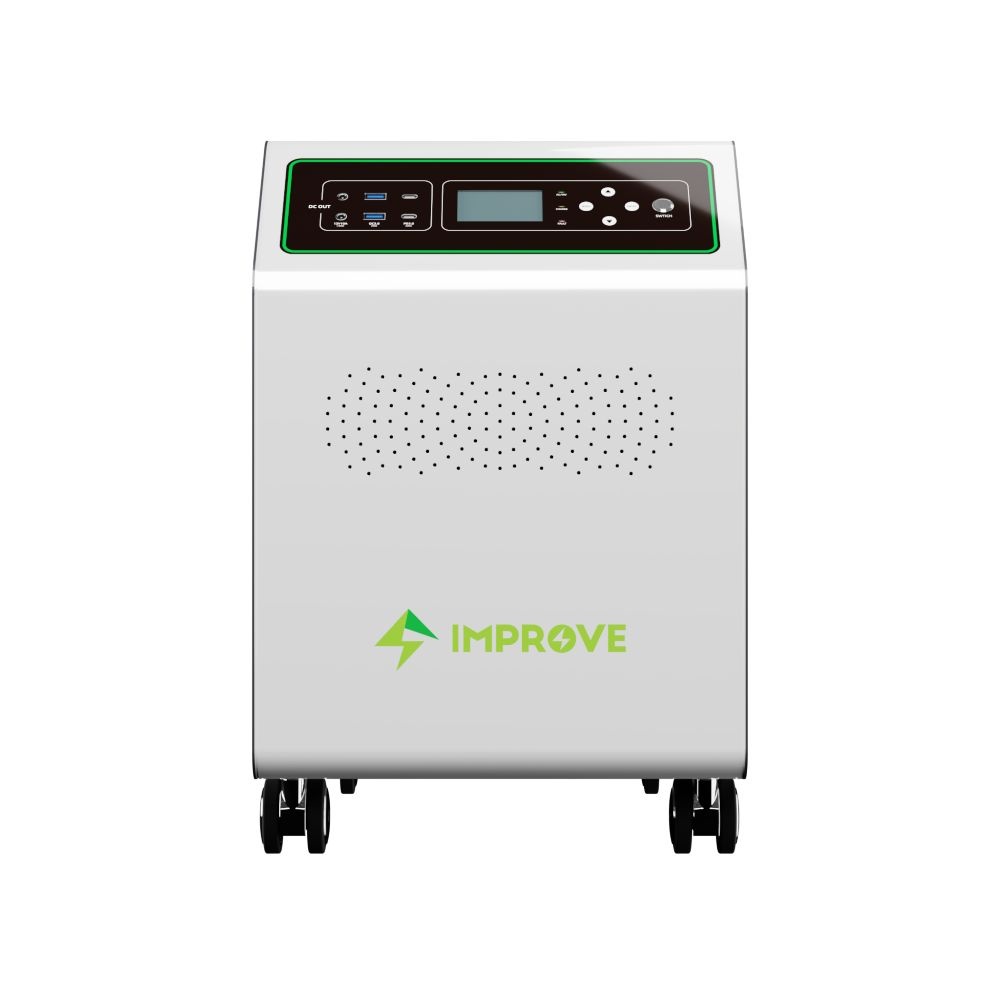
Off-grid solar battery application
PV and storage application imagery from the manufacturer's published materials.
12.8VRV & packs
25.6V24V systems
38.4V36V motive
51.2VStorage & 48V
Specification Plate

Key specifications

Platform51.2V nominal LiFePO4, stackable and rack formats
PV input (stackable system)Max. 5,500W · MPPT 125–450Vdc · 99.9% tracking efficiency (published configuration)
ChargingHybrid solar + mains/generator up to 100A on the published stackable configuration
Parallel capacity1–6 units (stackable system); up to 15–16 modules on wall/rack formats
Cycle life6,000 cycles or more at 80% DOD, 25°C (per model datasheet)
Operating temperatureCharge 0 to +45°C · discharge −20 to +55°C (published stackable module data)

Figures are the manufacturer's published data for this range. The written quote states the exact configuration of your build.

Why It Earns Its Place

Features

Published PV windows

Off-grid design fails on guessed inverter data. The datasheets state Voc limits, MPPT range and charge currents, so array design is engineering, not hope.

Daily-cycle chemistry

LiFePO4 at 6,000+ cycles at 80% DOD is what makes a 10–15 year off-grid service life a plan rather than a wish.

Generator-friendly

Hybrid charging accepts generator input alongside PV, the standard insurance policy for a run of bad weather.

Modular growth

Start with the load you have; add identical modules when the site grows. The platform does not change underneath you.

The three numbers every off-grid quote needs

Daily load in watt-hours, worst-month sun hours at the site, and the autonomy days you want to survive without sun. With those three numbers the battery size is arithmetic; without them it is marketing. Send us the three numbers — even rough ones — and the quote will show its working.

Lead-acid off-grid banks are usually sized at 50% depth of discharge, which doubles the nameplate capacity for the same usable energy. LiFePO4 at 80% usable depth of discharge means the nameplate number is much closer to the energy you actually get, one of the reasons the replacement maths in our lead-acid replacement guide favours lithium for daily-cycled sites.

Remote and unattended sites

For telecom, monitoring and agricultural sites, the communication ports matter as much as the capacity: RS485 and CAN reporting lets a site controller watch state of charge and alarms remotely. Tell us the monitoring platform in your enquiry and we will confirm protocol compatibility in the written quote.

Ordering & OEM

How ordering works

Minimum order quantities and lead times depend on the product type and the degree of customisation: standard products can start from smaller batches, while custom housings, labelling and packaging are assessed per project. Samples can be arranged, with sample and freight costs confirmed against the requirement. Every enquiry is answered with a written specification and quote stating the model, configuration and terms - nothing about an order here is left to chat messages.

Improve Battery runs OEM/ODM alongside its standard range, and ships with the export documentation each model carries (CE, RoHS, FCC, MSDS, UN38.3 types as listed per datasheet; certificates available upon request). State the model, voltage, quantity and destination in the enquiry form and the sales team in Shenzhen will reply with the full specification.

Questions

Frequently asked

How many autonomy days should I plan?

Two to three days is the common planning point for homes and farms; critical remote loads often plan more. Every extra day is a module-count decision we will price transparently.

Can I add solar later?

Yes — the inverter stages accept PV input from the start. Many sites install battery plus generator first and add the array in a second phase.

What about cold sites?

Published charge range starts at 0°C; below that, charging must be managed. Optional heater configurations exist in the range — raise the site's temperature profile in your enquiry and we will specify accordingly.

Do you ship to remote regions?

The company profile states products are sold to 50+ countries. Send the destination and we will quote delivered terms with the export documentation the shipment needs.

Related pages

Tell us the model. We price it in writing.

Model, voltage, quantity and destination - that is all a real quote needs.

Get a Factory Quote