Backup power that covers the house, not just the router: 51.2V LiFePO4 systems from 5.12kWh modules to 30kWh stacks, sized from the loads you actually need to keep live.
A whole home battery backup system has one job: when the grid stops, the house does not notice. The systems on this page are built from the manufacturer's 51.2V residential range — stackable bricks of 5.12kWh and 10.24kWh, wall-mounted powerwall units, and an all-in-one ESS with a 6kW inverter built in — so the backup capacity is a sizing decision, not a product gamble.
Sizing starts with the load profile, not the catalogue. List the circuits that must stay live (refrigeration, lighting, water pump, internet, medical devices, a home office), multiply by the hours of autonomy you want, and the module count follows. A 10.24kWh stack covers an efficient home's essential loads overnight; larger homes or longer autonomy targets stack to 20–30kWh on the same platform.
The published inverter data matters here: the all-in-one and stackable system configurations switch in 10ms, fast enough that computers and routers ride through the changeover, and hybrid charging combines solar and mains input so the battery refills from whichever source is available.
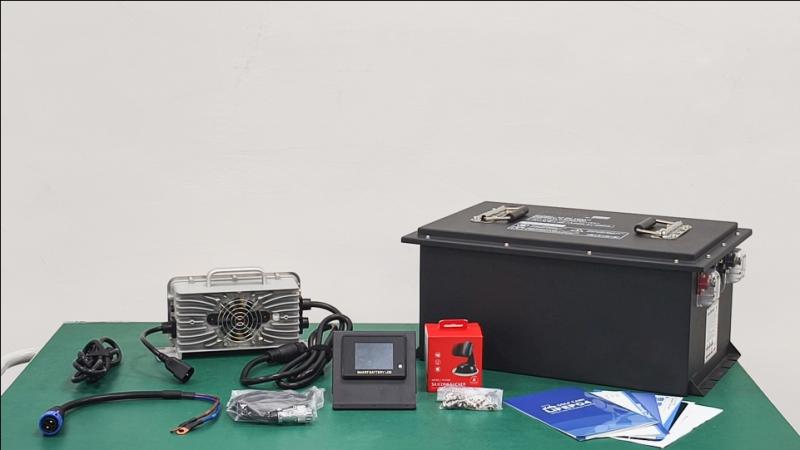
| Platform | 51.2V nominal LiFePO4 across all backup formats |
|---|---|
| Capacity range | 5.12kWh module to 30kWh+ stacked systems |
| Switch time | 10ms on published stackable and all-in-one system configurations |
| Cycle life | 6,000 cycles or more at 80% DOD (per model datasheet) |
| Communication | RS232 / RS485 / CAN; inverter matching confirmed per quote |
| Certification (published) | CE, RoHS, FCC, MSDS, UN38.3 on listed models; certificates available upon request |
Figures are the manufacturer's published data for this range. The written quote states the exact configuration of your build.
Quotes state the module count and inverter rating that cover your stated backup loads — in writing, before you order.
The same 51.2V modules serve a 5kWh starter system and a 30kWh whole-home stack, so expansion never orphans the first purchase.
10ms switch time keeps sensitive electronics running through an outage instead of rebooting them.
Hybrid charging accepts PV and mains together, so a backup system can grow into a solar storage system without replacement.
Most homes overbuy the first system and underbuy the second circuit. Separate loads into three tiers — always-on essentials, comfort loads you want for a few hours, and heavy loads (air conditioning, electric cooking, EV charging) you will shed during an outage. Backup capacity is bought for tier one, sized generously for tier two, and honestly excluded for tier three unless the budget and roof both allow a large stack.
The manufacturer's residential range covers that logic in hardware: start with the tier-one module count, and because every format shares the 51.2V platform, adding modules later is a mechanical and communication exercise, not a redesign.
A backup system without solar is a UPS for the house: it charges from the grid and discharges during outages, and its value is measured in outages survived. With solar, the same battery also shifts energy daily — charging at midday and discharging through the evening peak — which is where cycle life stops being a brochure number and becomes the economics of the system. LiFePO4 chemistry, rated at 6,000 cycles or more at 80% depth of discharge on these models, is what makes daily cycling rational instead of wasteful.
Minimum order quantities and lead times depend on the product type and the degree of customisation: standard products can start from smaller batches, while custom housings, labelling and packaging are assessed per project. Samples can be arranged, with sample and freight costs confirmed against the requirement. Every enquiry is answered with a written specification and quote stating the model, configuration and terms - nothing about an order here is left to chat messages.
Improve Battery runs OEM/ODM alongside its standard range, and ships with the export documentation each model carries (CE, RoHS, FCC, MSDS, UN38.3 types as listed per datasheet; certificates available upon request). State the model, voltage, quantity and destination in the enquiry form and the sales team in Shenzhen will reply with the full specification.
It depends entirely on the load. At a 500W average essential load, 10.24kWh delivers roughly a day of autonomy at 80% usable depth of discharge; at 2kW it delivers about four hours. The quote process works from your load list, not from averages.
Only if it is sized for it. Air conditioning is a tier-three load with high start-up current; tell us the unit's rating and we will state plainly whether the proposed inverter and stack cover it.
No. The systems charge from the grid alone. Solar can be added later — the hybrid inverter stages in the published configurations accept PV input without replacing the battery.
The system shuts down cleanly at its low-voltage cut-off and restarts when grid or solar input returns. Sizing for realistic outage duration is exactly what the load-profile quote is for.
Model, voltage, quantity and destination - that is all a real quote needs.