The cabinet-format pair in full: IMP-LR-05B and IMP-LR-10B, the two rack units behind the server rack range, with both datasheets on one page.
This page carries the full published data for both rack models, because rack buyers compare in tables, not adjectives. The IMP-LR-05B: 51.2V, 100Ah, 5.12kWh, 442 × 527 × 133mm, about 46kg. The IMP-LR-10B: 51.2V, 200Ah, 10.24kWh, 442 × 790 × 155mm, about 86kg. Shared figures: 58.4V charge voltage, 40V discharge cut-off, 50A standard discharge, 100A maximum continuous in both directions (200A customisable on the 10B), 6,000 cycles or more at 80% DOD, IP54 enclosures, RS232/RS485/CAN communication as an option set, and parallel support for 16 modules.
Sized against real rooms: a cabinet of 10B units reaches 163kWh of nameplate energy on one low-voltage platform — enough for small commercial backup, telecom sites and large residences — while a single 05B covers the home plant room that wants rack discipline instead of a wall unit. Discharge temperature runs −20–55°C and storage −10–45°C on both models.
The two models exist because rack depth is a real constraint: the 05B's 527mm depth fits shallower cabinets; the 10B's 790mm depth buys double energy per unit where the cabinet allows. Both are production models from the same line as the wall and stack formats, sharing cells, protection architecture and documentation.
| Models | IMP-LR-05B · IMP-LR-10B |
|---|---|
| Nominal voltage / energy | 51.2V · 5.12kWh (100Ah) / 10.24kWh (200Ah) |
| Dimensions | 442 × 527 × 133mm (05B) · 442 × 790 × 155mm (10B) |
| Weight | Approx. 46kg / 86kg |
| Cycle life | 6,000 cycles or more (80% DOD, 25°C) |
| Charge voltage / cut-off | 58.4V / 40V |
| Max. continuous current | 100A (200A customisable, 10B) |
| Module parallel | 16 pcs |
| IP rating | IP54 |
| Certification (published) | CE, UN38.3, MSDS; certificates available upon request |
Figures are the manufacturer's published data for this range. The written quote states the exact configuration of your build.
The comparison rack buyers actually make — depth, weight, energy, current — is printed side by side.
A cabinet-scale ceiling of 163kWh on the 10B keeps big briefs on one platform and one protocol.
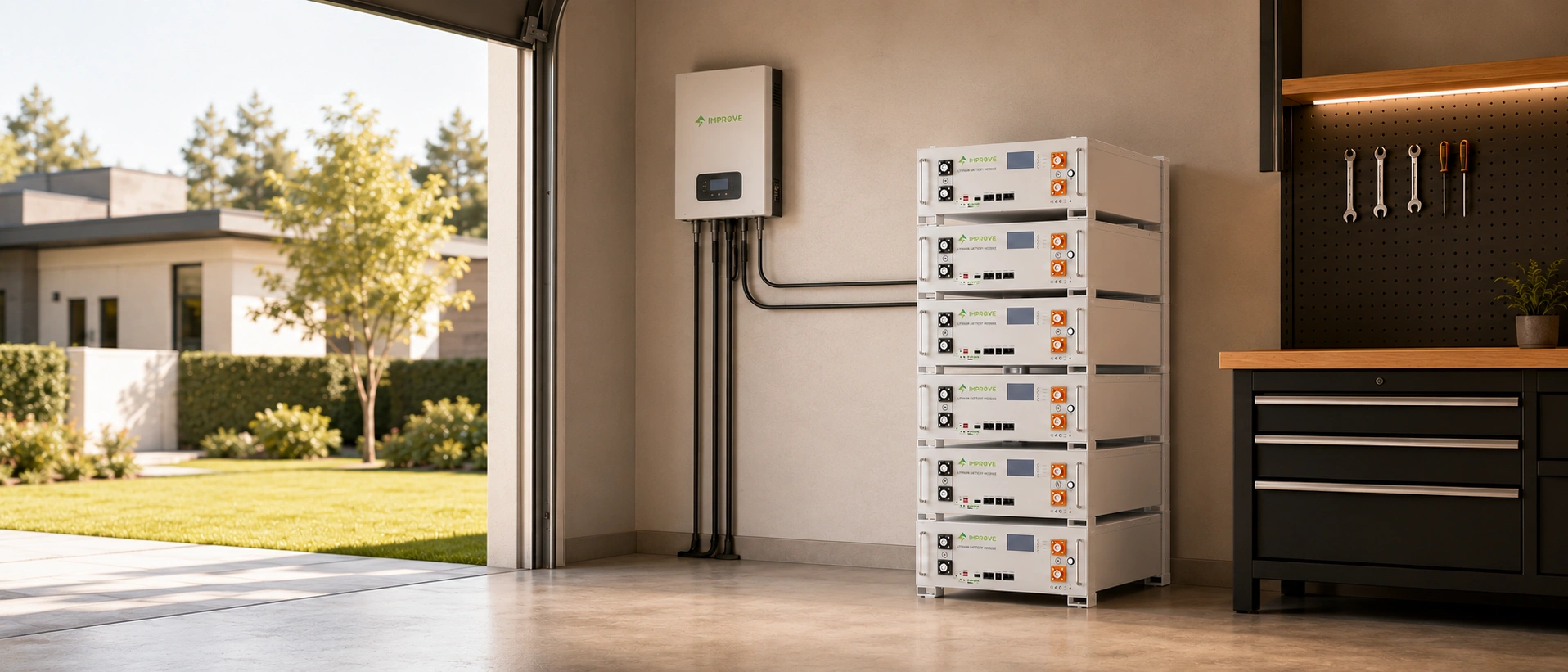
Plant rooms, garages and light industrial spaces are the design environment, not an afterthought.
High-current strings are an order-level configuration, specified in writing before production.
Bring the cabinet depth, the energy target and the inverter or PCS model to the enquiry. The quote returns the model mix, the unit count, the parallel configuration and the communication setup — and flags it plainly if the brief belongs on the high-voltage HR platform instead. That check costs nothing at quote stage and a great deal after delivery.
Minimum order quantities and lead times depend on the product type and the degree of customisation: standard products can start from smaller batches, while custom housings, labelling and packaging are assessed per project. Samples can be arranged, with sample and freight costs confirmed against the requirement. Every enquiry is answered with a written specification and quote stating the model, configuration and terms - nothing about an order here is left to chat messages.
Improve Battery runs OEM/ODM alongside its standard range, and ships with the export documentation each model carries (CE, RoHS, FCC, MSDS, UN38.3 types as listed per datasheet; certificates available upon request). State the model, voltage, quantity and destination in the enquiry form and the sales team in Shenzhen will reply with the full specification.
Four 10B units or eight 05B units both reach it; depth and unit count decide. The quote compares both layouts against your cabinet.
Datasheets list RS232/RS485/CAN as optional configurations on the rack models — state your inverter's bus in the enquiry so the build includes it.
Discharge −20–55°C and storage −10–45°C on the published data; IP54 covers dust and splashes. Unheated spaces are within the design envelope.
Model, voltage, quantity and destination - that is all a real quote needs.